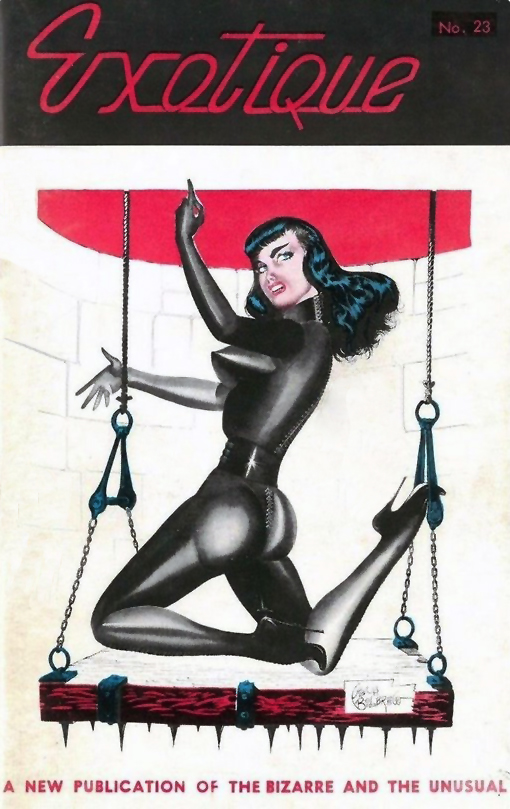
This analysis examines the disinformation campaign presented in the 2012 film Dreams from My Real Father, directed by Joel Gilbert, which alleges that Frank Marshall Davis, an African-American journalist, poet, and labor activist, was the biological father of former President Barack Obama. The film further claims that Davis had a sexual relationship with Obama’s mother, Ann Dunham, allegedly facilitated by her father, Stanley Dunham, whom Gilbert portrays as a covert CIA operative assigned to monitor communists in Hawaii. Among its most inflammatory claims, Gilbert asserts that Davis took nude photographs of Dunham in the late 1960s and presents those images as proof of their alleged relationship.
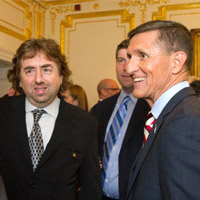
Image 1: L-R Joel Gilbert and his idol, General Michael Flynn
This project places the film within the broader framework of disinformation, political warfare, and delegitimization operations. It examines the film’s purpose, the techniques used in its construction, and the motivations behind the spread of its false narrative. By deconstructing the film’s key claims, including its supposed photographic evidence and the personal relationships it attempts to fabricate, this analysis evaluates the validity of Gilbert’s assertions through image analysis, source verification, and digital forensics.
The Movie Production
Dreams from My Real Father was produced, written, and directed by Joel Gilbert under Highway 61 Entertainment, a Los Angeles–based production company founded by Gilbert, who served as its president. Registered in California in 2005, Highway 61 Entertainment specialized in edgy/fake documentaries on political and cultural themes, often blending investigative narration, dramatized reenactments, disinformation, and archival materials. The company maintained offices in Thousand Oaks, California, and is an LLC that may have dissolved in 2022.
The film’s production relied on voice-over narration, reenactments, edited archival material, and historical photographs and video clips, some of which appear to have been manipulated, misrepresented, or stripped of key contextual information in order to fit a predetermined narrative. Although the film was formally produced through Gilbert’s company, questions remain regarding outside financial support and the broader political architecture behind the project.
The film’s distribution bypassed traditional theatrical and broadcast channels. Instead, it relied on an aggressive direct-mail campaign that placed more than one million DVDs into the hands of voters in swing states during the 2012 presidential election. That fact alone is operationally significant. Such a campaign required money, logistics, targeting, and message discipline. It did not resemble spontaneous grassroots circulation. It resembled an organized dissemination effort built to achieve maximum electoral effect in contested political terrain.
Highway 61 Entertainment’s other productions, including There’s No Place Like Utopia, Atomic Jihad, and Bob Dylan’s Jesus Years, similarly employed a blend of provocation, pseudo-investigative framing, and dramatized storytelling. In that sense, Dreams from My Real Father did not emerge from nowhere; it emerged from a production model already comfortable with blurring the boundary between documentary form and narrative manipulation.
Analysis Steps
This analysis was conducted through the following steps:
Review of Key Claims
The film’s assertions regarding an alleged relationship between Ann Dunham and Frank Marshall Davis were examined in detail. The claim that Stanley Dunham was a covert CIA operative was also reviewed, along with the film’s central allegation that Davis took nude photographs of Dunham.
Evaluation of Evidence
The provenance and authenticity of the photographs used in the film were assessed to determine whether they were legitimate, misattributed, or manipulated. The credibility of the film’s cited sources was scrutinized, and the plausibility of the relationships and events depicted in the narrative was tested against known historical timelines and documentary context.
Image Analysis and Digital Forensics
One of the film’s most provocative claims is that Frank Marshall Davis took nude photographs of Ann Dunham in Hawaii during the late 1960s. Gilbert presents these photographs as proof of an intimate relationship between Dunham and Davis and, by extension, as evidence of Obama’s “true paternity.” To assess the credibility of these allegations, extensive forensic analysis and advanced image-processing techniques were applied.
Acquisition and Digitization of Source Material
Copies of the fetish magazines Gilbert claimed contained the nude photographs were sourced from archival collections and private collectors. These magazines were digitized at high resolution to preserve every detail for forensic evaluation.
Original Publication Analysis
Metadata extraction and publication analysis showed that the magazines in question had ceased publication before Ann Dunham arrived in Hawaii. This finding alone destroyed Gilbert’s timeline.
AI-Based Reconstruction and Comparison
AI tools were used to enhance and reconstruct the scanned images. Facial comparison and feature analysis were then applied against authenticated photographs of Ann Dunham from the same era. The subjects did not match.
Object Classification and Stylistic Review
Advanced object classification techniques were used to examine photographic style, props, clothing, composition, and studio conventions. The images aligned with commercial studio fetish photography of an earlier period and did not support Gilbert’s narrative of private photographs taken by Davis.
Contextual Verification
Cross-referencing the images against publication history, Dunham’s documented movements, and the historical context of the magazines further discredited the film’s core claim. The photographs were commercially published long before Dunham’s presence in Hawaii, nullifying any connection to Davis.
These findings exposed the fraudulent nature of the film’s most sensational evidence. More importantly, they revealed something larger: the deliberate repurposing of obscure archival material to manufacture a false narrative with political utility.
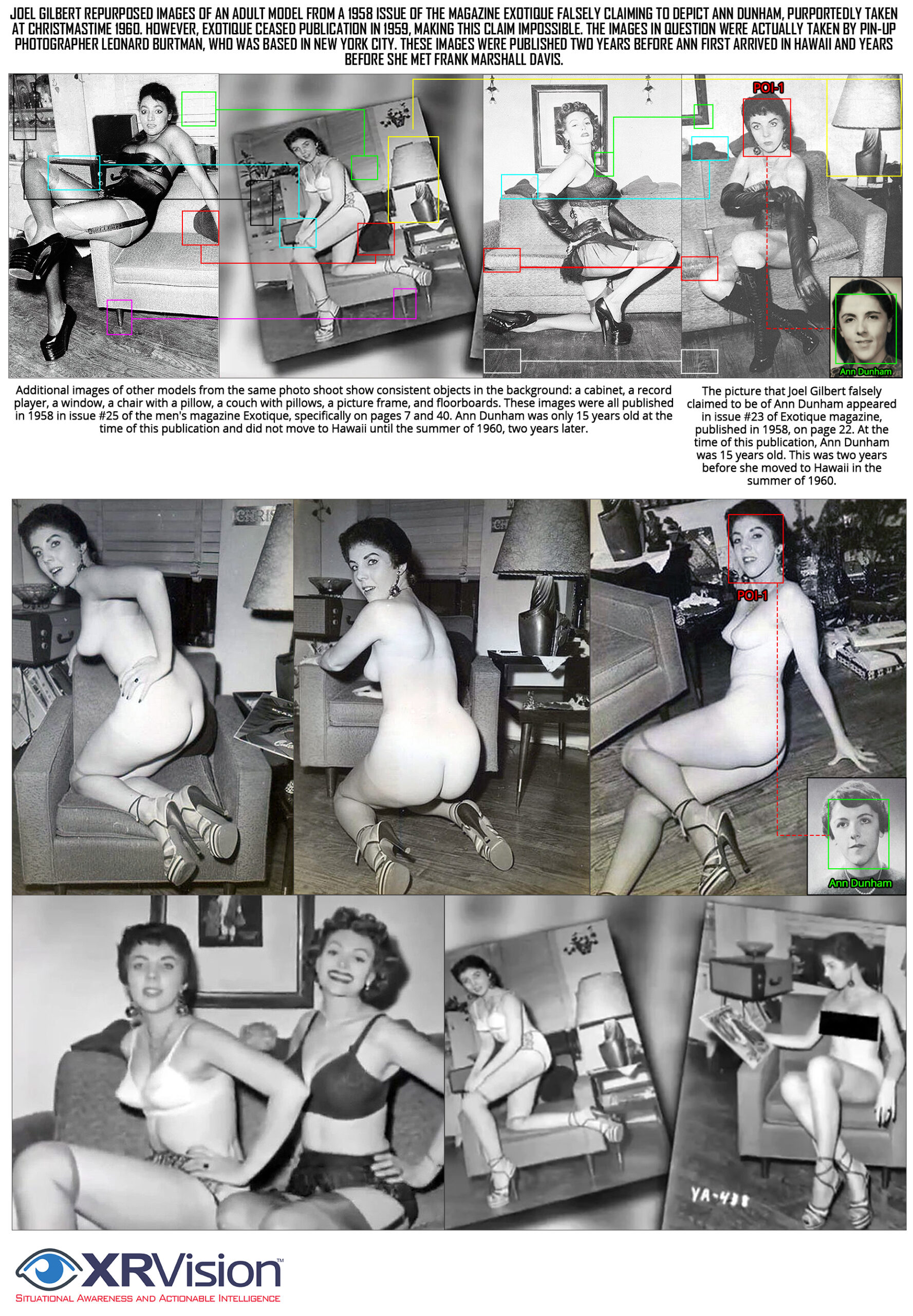
Image 1: Comparison of the images Joel Gilbert attributed to Ann Dunham with original photographs published in Exotique magazine. The composite shows that the images came from a 1958 Leonard Burtman pin-up shoot published before Dunham arrived in Hawaii, with recurring background objects across the series confirming a common commercial studio setting. Facial comparison further shows that Ann Dunham and the model in the photoshoot do not match in key facial features and overall structure, contradicting Gilbert’s claim that the images depict Dunham.
Leonard Burtman was a mid-century American entrepreneur in the grand tradition of “what if a radio engineer, a serial alias collector, and a raincoat flasher all got trapped in the same trench coat?” Born in Nebraska in 1920, he drifted from electronics work and wartime technical gigs into arrests, bad checks, stolen-property trouble, and a federal prison stint, then did what any enterprising sleazeball would do: he rebranded. By the 1950s, back in New York, he had reinvented himself as a fetish-photo impresario and publisher, cranking out Exotica and then Exotique while operating under more than seventeen aliases that even the FBI practically needed a seating chart. In short, Burtman helped pioneer the grubby commercial sex-publication world that later got glamorized and sold to America as Playboy and Penthouse.
The irony is almost literary: in trying to expose Obama, Joel Gilbert ended up rummaging through the archives of Leonard Burtman, a flasher in a trench-coat smut merchant, and repackaging mid-century smut as political “evidence.” Burtman sold sleaze as sleaze; Gilbert’s only real innovation was to market it as investigative truth.
How Gilbert Did It
Gilbert’s production of Dreams from My Real Father reflects the logic and mechanics of a deliberate influence operation. Its power did not lie in the quality of its evidence, which was weak to nonexistent, but in its use of tradecraft designed to make falsehoods appear credible long enough to shape public opinion.
The strongest indicators are as follows.
- Fabrication through obscurity
Gilbert misattributed images from vintage fetish magazines as photographs of Ann Dunham. By exploiting obscure and largely inaccessible source material, he created a verification asymmetry: the claims were easy to circulate, but difficult for ordinary viewers to independently disprove. This is a classic disinformation tactic. - Investigative theater
The film relied on narration, reenactments, edited archival footage, selective framing, and pseudo-documentary presentation to create a false aura of seriousness. This was not genuine investigation. It was the staging of investigation. The purpose was to simulate discovery while guiding the audience toward a predetermined conclusion. - Selective omission
Gilbert excluded decisive contextual facts, most notably publication dates, provenance details, and chronological contradictions—that would have collapsed the narrative immediately. That was not incidental sloppiness. It was the withholding of disconfirming evidence necessary to preserve the illusion. - Identity-based delegitimization
The film did not merely attack Obama politically. It attacked his legitimacy at the level of bloodline, parentage, heritage, and ideological inheritance. In conjunction with birtherism, it framed him as alien, fraudulent, and fundamentally illegitimate. This moved the attack from biography into psychological warfare. - Coordinated, targeted dissemination
The mailing of more than one million DVDs to swing-state voters points to deliberate message targeting, not organic message spread. That scale of distribution required financing, logistical coordination, and strategic intent. It was a delivery system built for political effect. - Opaque financing and plausible deniability
Gilbert refused to disclose the film’s donors, while the operation appears to have benefited from loopholes that shielded its financial backers from public scrutiny. Concealed sponsorship is one of the strongest indicators of an influence campaign, because it allows the architects to preserve distance from the message while still exploiting its impact. - Integration into a larger delegitimization architecture
Dreams from My Real Father was not best understood as a standalone smear. It functioned alongside the birther narrative as part of a twin operation. One line of attack questioned Obama’s citizenship; the other attacked his paternity, inheritance, and ideological origins. Together, they created a multi-vector assault on legitimacy. - Indicators consistent with active-measures tradecraft
The broader structure of the campaign is consistent with the logic of an active measure: introduce a sensational falsehood through deniable channels; wrap it in pseudo-evidence; amplify it through aligned political and media networks; exploit identity fault lines; and force the target into a reactive posture. Whether every participant knowingly served a foreign agenda is a separate question. But the methods employed, fabrication, concealment, psychological targeting, layered dissemination, and plausible deniability, fit the profile of influence tradecraft long associated with Russian and Soviet information operations.
That is the critical point. The significance of Dreams from My Real Father lies not only in the falsity of its claims but in the operational design behind them.
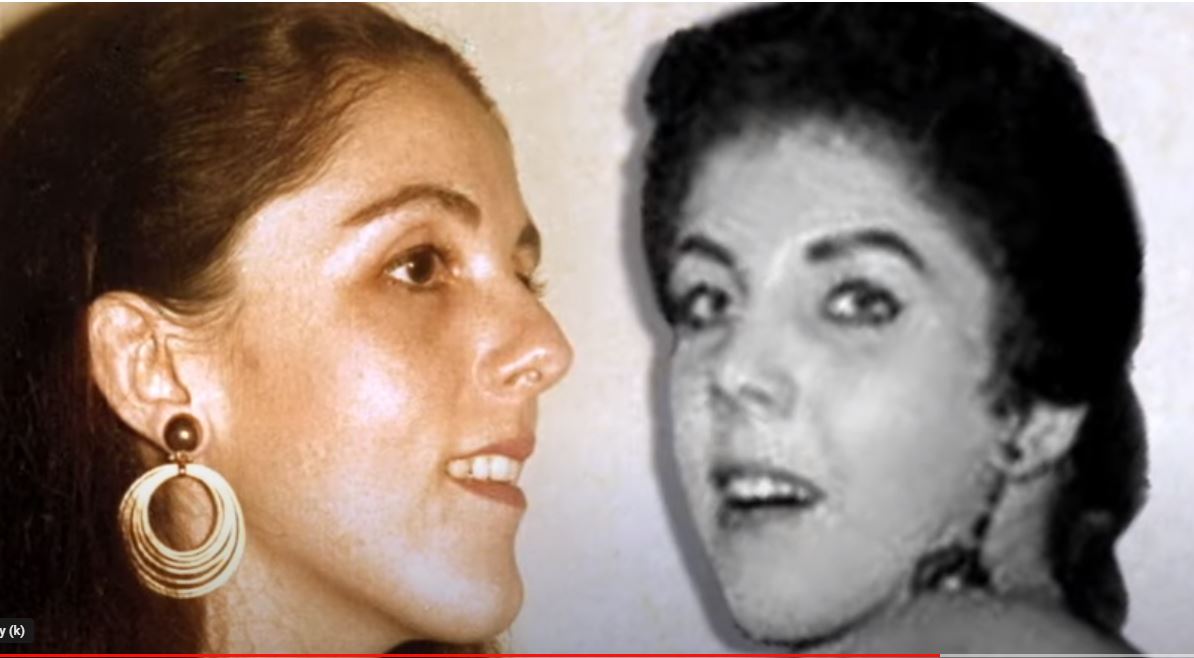
Image 2: Left-to-right comparison of the facial details of Ann Dunham and the model in the photoshoot.
Conclusion and Strategic Implications
The twin operations surrounding Dreams from My Real Father and the broader birther initiative bear the hallmarks of a coordinated active measure rather than mere hardball domestic politics. What emerged was not simply a false story about Barack Obama’s parentage or citizenship, but a structured delegitimization campaign designed to corrode public trust, inflame identity-based suspicion, and influence voter perceptions during the 2012 election cycle.
The episode matters because Dreams from My Real Father was more than a dishonest political film. It operated within a broader information battlespace in which falsehoods were engineered for persistence, emotional force, and political utility. Its overlap with the birther ecosystem strongly suggests that it formed part of a wider architecture aimed at attacking Obama’s legitimacy from multiple directions.
The forensic dismantling of the film’s core claims is therefore strategically important. Metadata analysis, source verification, publication-date reconstruction, contextual chronology, stylistic examination, and AI-assisted image comparison did more than debunk a fringe narrative. They exposed the mechanics of the operation itself, showing how obscure archival material could be weaponized, how presentation could simulate authenticity, and how falsehood could be engineered for mass political effect.
The broader lesson is clear: democratic systems remain vulnerable to low-cost, high-impact disinformation campaigns that exploit regulatory loopholes, media fragmentation, and emotionally charged identity narratives. Countering such operations requires more than after-the-fact fact-checking. It requires a real kill chain, an aggressive forensic scrutiny, source transparency, network mapping, and the willingness to recognize politically useful falsehoods as possible instruments of organized influence.
In that sense, Dreams from My Real Father and the birther campaign should be understood not as eccentric side stories of the 2012 election, but as a warning case of Russian information warfare: a demonstration of how fabricated narratives, covert amplification, and psychological targeting can be fused into a political weapon.
References and Sources
– Collins, Loren (October 25, 2012). “Joel Gilbert’s Ever-Changing Story”. Barackryphal.
– Collins, Loren (October 2, 2012). “Fever Dreams From My Real Father #1: The Nude Photos Debunked”. Barackryphal.
– Davis, Frank Marshall (December 2006). Writings of Frank Marshall Davis: A Voice of the Black Press. Univ. Press of Mississippi.