The Lion, the Scribes, and the Church Fathers
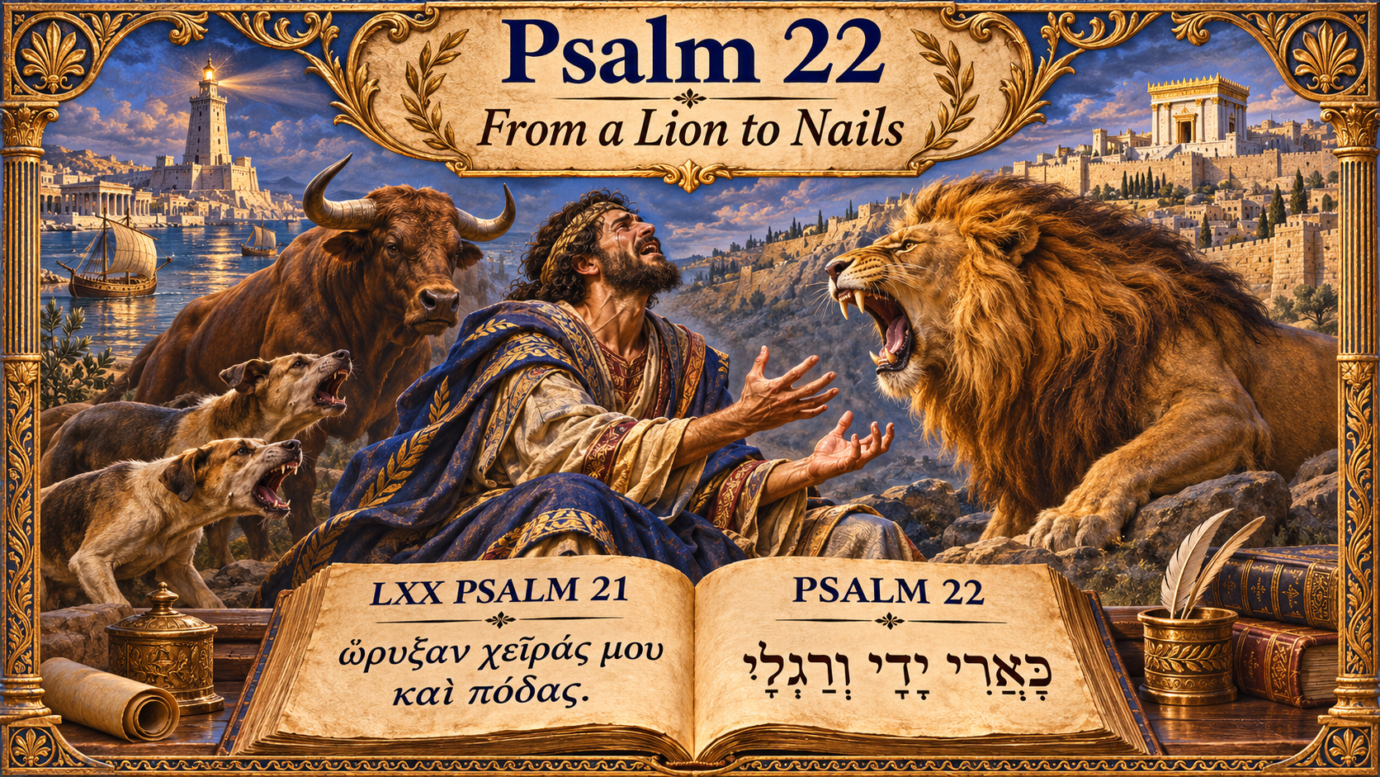
Psalm 22 offers one of the more remarkable disappearing acts in biblical history. Somewhere between the Hebrew original and its eventual adoption as Christian prophecy, a lion vanished, a Greek verb took its place, and the unfortunate King David found himself nailed to a Roman cross. The transformation was so successful that centuries of theologians would treat the resulting interpretation as ancient prophecy rather than ask what happened to the original psalm.
What followed was an extraordinary exercise in theological ingenuity. Translators supplied competing readings, church fathers discovered increasingly elaborate messianic predictions, and inconvenient Hebrew passages became opportunities to accuse the Jews of tampering with their own scriptures. From late antiquity through the Middle Ages, scholars could place contradictory readings side by side on the same parchment without disturbing the theological conclusions built upon them. It was a remarkable intellectual achievement: the ability to read the original, preserve the translation, and ignore the difference.
The following review traces Psalm 22’s journey through Hebrew manuscripts, Greek and Latin translations, Christian apologetics, and the Christian scribal tradition. Along the way, we encounter a Roman god mistaken for a Samaritan magician, an imaginary Jewish debating partner whose Christian author writes both sides of the argument and still declares himself the winner, and a parade of church fathers discovering Roman nails and crucifixions in places where the original Hebrew had reported nothing more alarming than ferocious wildlife.
I. The Hebrew Psalm: Bulls, Lions, Dogs, and Exposed Bones
The Hebrew text of Psalm 22 supplies the literary setting against which the disputed phrase must be read.
Psalm 22:13 — The Bulls of Bashan
Hebrew: סְבָבוּנִי פָּרִים רַבִּים אַבִּירֵי בָשָׁן כִּתְּרוּנִי
English: “Many bulls have surrounded me; mighty ones of Bashan have encircled me.”
Psalm 22:14 — The Ravening Lion
Hebrew: פָּצוּ עָלַי פִּיהֶם אַרְיֵה טֹרֵף וְשֹׁאֵג
English: “They open their mouths against me, like a ravening and roaring lion.”
Psalm 22:17 — The Dogs and the Disputed Phrase
Hebrew: כִּי סְבָבוּנִי כְּלָבִים עֲדַת מְרֵעִים הִקִּיפוּנִי כָּאֲרִי יָדַי וְרַגְלָי
Literal English: “For dogs have surrounded me; a company of evildoers has encircled me; like a lion, my hands and my feet.”
The disputed phrase is: כָּאֲרִי יָדַי וְרַגְלָי Ka’ari yadai ve-raglai “Like a lion, my hands and my feet.”
The Hebrew contains no verb meaning “pierced.” The phrase belongs to a passage already populated by predatory animals. The Hebrew construction is elliptical, leaving the action associated with the lion unstated.
Psalm 22:18 — The Exposed Bones
Hebrew: אֲסַפֵּר כָּל־עַצְמוֹתָי הֵמָּה יַבִּיטוּ יִרְאוּ־בִי
English: “I can count all my bones; they look and stare at me.”
The description completes the picture of a sufferer surrounded by enemies, physically exposed and reduced to helplessness.
II. The Septuagint: The Lion Becomes a Verb
Psalm 21:17 in the Septuagint has a different reading of the phrase.
Greek: ὅτι ἐκύκλωσάν με κύνες πολλοί, συναγωγὴ πονηρευομένων περιέσχον με· ὤρυξαν χεῖράς μου καὶ πόδας.
Literal English: “For many dogs surrounded me; an assembly of evildoers encircled me; they dug my hands and feet.”
The difference is:
| Hebrew Text (Masoretic) | Greek Septuagint (LXX) |
|---|---|
| כָּאֲרִי (ka’ari) | ὤρυξαν (ōryxan) |
| “Like a lion” | “They dug” |
| Animal comparison | Third-person plural verb |
| Describes a lion | Describes an action |
| No verb of digging or piercing | From ὀρύσσω (oryssō), meaning “to dig,” “excavate,” or “gouge” |
The Greek verb ὤρυξαν is the third-person plural aorist active form of ὀρύσσω, meaning “to dig,” “excavate,” or “gouge.”
The Septuagint Greek text does not mention nails, a cross, Roman soldiers, or crucifixion. Its immediate literary setting still contains the dogs and the surrounding assembly of enemies. The transformation from “like a lion” to “they dug” is the linguistic tweak at the center of the problem.
III. The Dead Sea Scrolls: A Yod, a Vav, and an Extra Aleph
The Nahal Hever Psalms manuscript (line 12), commonly designated 5/6HevPs, contains the disputed reading generally transcribed:
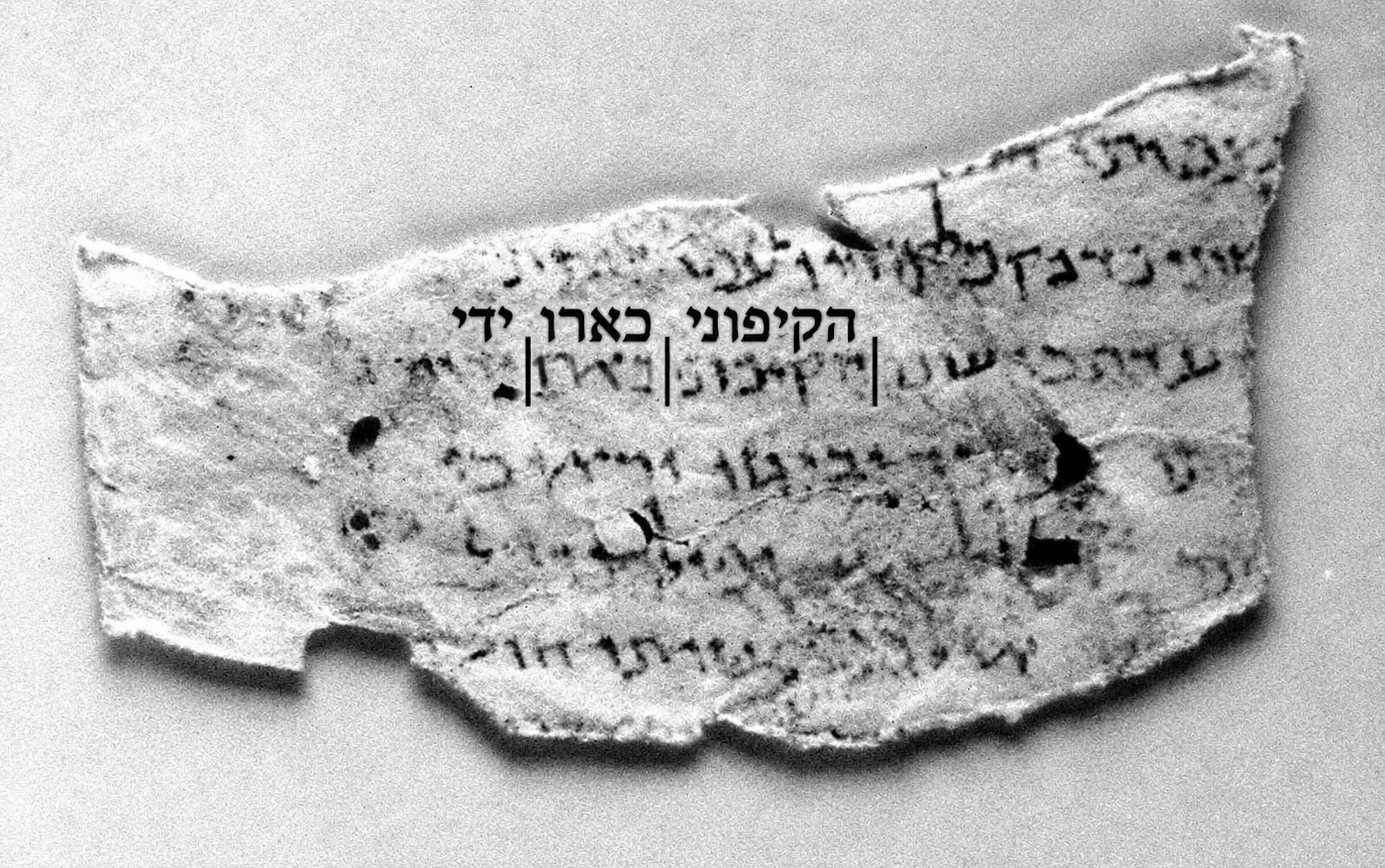
Image 1: Nahal Hever Psalms manuscript (line 12) fragment 5/6HevPs
כארו — ka’aru
The Masoretic text reads: כארי — ka’ari
The distinction concerns the final letter:
כארי
י — Yod
כארו
ו — Vav
In Hebrew handwriting, the difference between a yod and a vav can depend on the length of a stroke. An elongated yod provides a straightforward scribal explanation for the variant. There is another linguistic difficulty with interpreting כארו as “they dug.” The ordinary Hebrew form of that verb is:
כרו — karu
The additional aleph in כארו remains. Changing the final yod to a vav does not, by itself, produce the standard Hebrew word for “they dug.”
This is the textual problem behind trying to use the Dead Sea Scrolls to prove the image of a lion acquiring a hammer and nails through the length of a pen stroke.
IV. Justin Martyr: From Psalm to Crucifixion
Writing in the middle of second century CE, Justin Martyr, in Dialogue with Trypho, Chapter 97, performs an impressive feat of biblical archaeology: he discovers a Roman crucifixion in a Hebrew poem populated by lions, bulls, and dogs. The disputed hands-and-feet passage becomes “They pierced my hands and my feet,” and the Greek verb is promptly fitted with Roman nails. The psalmist’s suffering is no longer poetry; it is a detailed execution report written almost a thousand years before the alleged event. There is only one minor inconvenience: Justin’s argument rests on an interpretation of a Greek translation, not the Hebrew text.
Justin’s approach to textual criticism was equally creative. In Chapter 71, he attacks Jewish rejection of the Septuagint’s authority. In Chapter 72, he identifies passages supposedly removed from Ezra and Jeremiah. By Chapter 73, he has discovered another missing prophecy: the words “from the wood,” allegedly deleted by Jewish interpreters from Psalm 95:10 in Greek numbering (Psalm 96:10 in Hebrew numbering). Naturally, the wood turns out to be the cross. Justin never produces a Hebrew manuscript containing the missing words, but the absence of evidence hardly inconveniences a man who has already located a crucifixion among the livestock.
His historical investigations were equally spectacular. In First Apology, Chapter 26, Justin confidently identifies a statue in Rome as a monument to Simon Magus, complete with an inscription supposedly reading Simoni Deo Sancto — “To Simon, the Holy God.” Unfortunately (or fortunately, depending on your point of view), the actual inscription discovered on Tiber Island reads Semoni Sanco Deo Fidio, a dedication to the Roman deity Semo Sancus. Justin had apparently mistaken a Roman god for a Samaritan magician. A few inconvenient letters, and an entirely different deity, were evidently no obstacle to a good theological argument. And this was the same man who couldn’t read Hebrew if his short life depended on it, yet confidently accused the Jews of falsifying their own scriptures.
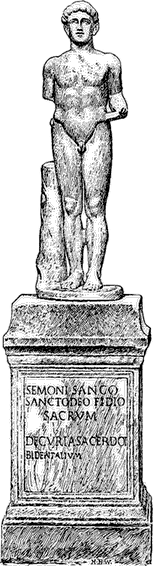
Image 2: The satue of Semoni Sanco SEMONI . SANCO . DEO . FIDIO . SACRUM . DECURIA . SACER- DOT[UM] BIDENTALIUM. “Sacred to Semo Sancus, the god of fidelity, dedicated by the college of priests of the Bidental.”
Trypho, Justin’s conveniently manufactured Jewish opponent, challenges the accusations of scriptural mutilation. Justin, however, never produces a single Hebrew manuscript to substantiate his charges — charges later echoed in the Islamic doctrine of taḥrīf. His method is wonderfully economical: declare a prophecy missing, accuse the Jews of deleting it, and treat its absence as evidence of their guilt. It is theological ventriloquism at its finest: Justin plays the scholar, Trypho plays the idiot, and the audience is expected not to notice that the puppeteer is a recent convert from paganism, unable to read Hebrew, yet desperately trying to pass himself off as an authority on Jewish scripture.
V. Tertullian: The Latin Tradition and the Cross
Writing at the beginning of the third century CE, Tertullian, in Against Marcion, Book III, Chapter 19, takes the Greek interpretation of Psalm 22 and gives it the full Roman treatment. The unfortunate psalmist, already surrounded by bulls, dogs, and lions, now finds himself nailed to a cross. The disputed hands-and-feet passage becomes a precise description of crucifixion, while the surrounding animal imagery is pressed into theological service. Tertullian even transforms the horns of a wild ox into the extremities of the cross. By now, the Greek mistranslation has been promoted to fulfilled prophecy, and the entire animal kingdom has been recruited as witnesses for the prosecution. The lion has lost his place in the Hebrew, the ox has become a piece of Roman execution equipment, and the dogs are standing as witnesses.
VI. Jerome, Aquila, and the Bound Hands and Feet
Jerome, unlike Justin and Tertullian, actually knew Hebrew and worked directly with Hebrew biblical texts. Yet in his Hebrew-based translation of Psalm 22:17, he rendered the disputed passage as:
Latin: Vinxerunt manus meas et pedes meos.
English: “They bound my hands and my feet.”
The verb vinxerunt means “they bound,” introducing yet another interpretation of the unfortunate psalmist’s hands and feet. The Masoretic Hebrew reads “like a lion,” the Septuagint reads “they dug,” and Jerome supplies “they bound.” Nor was binding Jerome’s invention. Ancient Greek translators, including Aquila and Symmachus, transmitted alternative readings associated with binding. Apparently, the hands and feet were subjected to an impressive variety of treatments, depending on which translator happened to be holding the pen.
The competing readings can be summarized as follows:
| Tradition | Reading |
|---|---|
| Hebrew | Like a lion |
| Septuagint | They dug |
| Aquila, reported variant | They bound |
| Symmachus | As those seeking to bind |
| Jerome’s Hebrew-based Psalter | They bound |
| Christian crucifixion interpretation | They pierced |
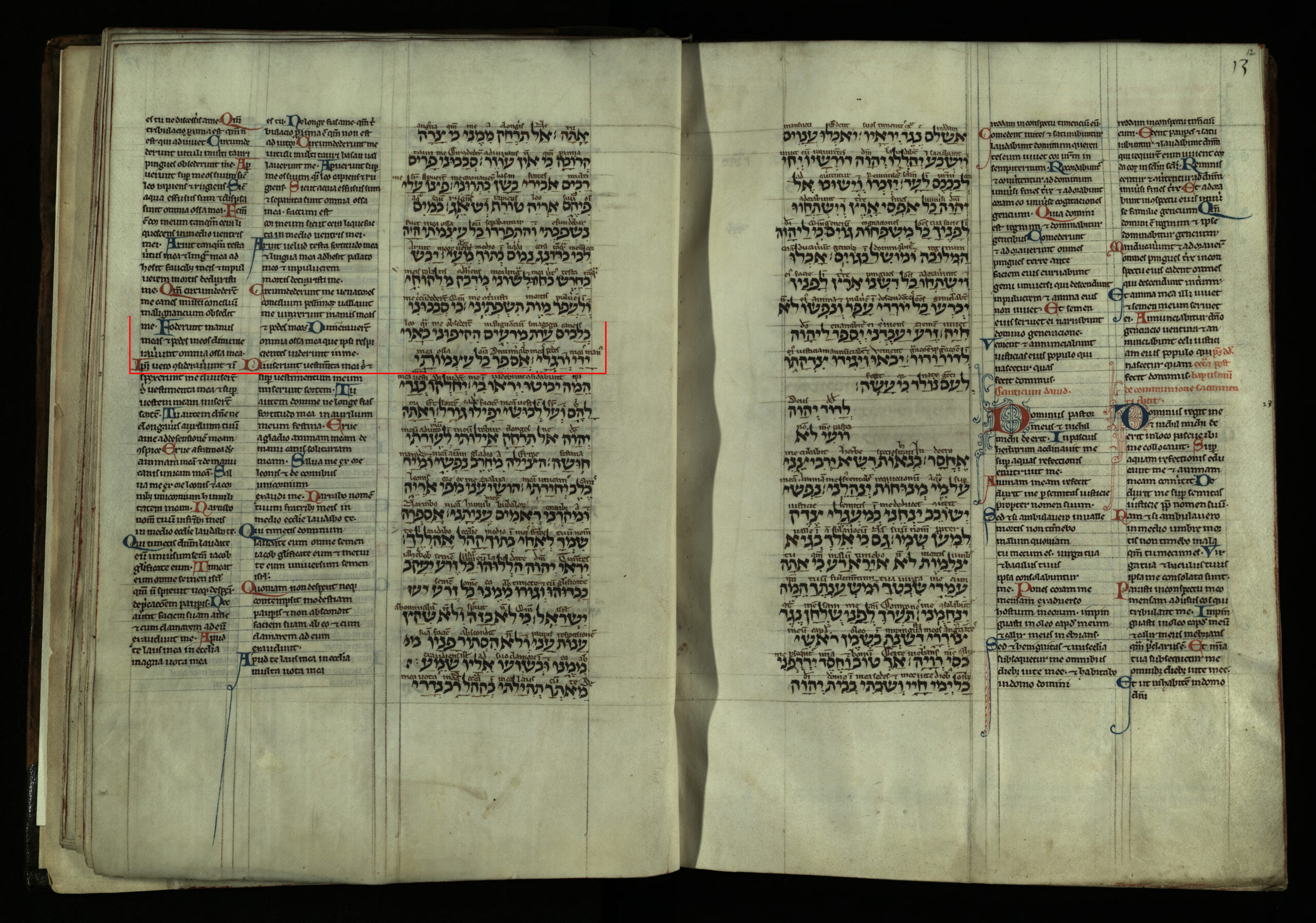
Image 3: Trinity College, Cambridge, MS R.8.6, thirteenth century
A remarkable example of Byzantine and medieval theological cognitive dissonance survives in the thirteenth-century Psalterium Hebraico-Latinum, preserved at Trinity College, Cambridge (MS R.8.6). This extraordinary manuscript places the Hebrew Psalms, complete with interlinear Latin glosses, alongside two Latin translations: Jerome’s Hebrew-based Psalter and the Greek-derived Gallican Psalter. Here, on the same parchment, the scribe performs the remarkable feat of translating and mistranslating the same biblical passage simultaneously.
In the thirteenth-century Cambridge manuscript (Psalterium Hebraico-Latinum, Trinity College MS R.8.6), the Hebrew text of Psalm 22:17 appears alongside an interlinear Latin gloss and two Latin translations. The passage can be arranged as follows, with the Hebrew on the right and the translations on the left:
| Latin Translation (Gallican Psalter) | Interlinear Latin Gloss | Hebrew (Masoretic) |
|---|---|---|
| Circumdederunt me canes multi Many dogs surrounded me |
canes — dogs | כִּי סְבָבוּנִי כְּלָבִים |
| Concilium malignantium obsedit me An assembly of evildoers besieged me |
malignancium — of evildoers circumdederunt — surrounded |
עֲדַת מְרֵעִים הִקִּיפוּנִי |
| Foderunt manus meas et pedes meos They dug my hands and feet |
leo — lion | כָּאֲרִי יָדַי וְרַגְלָי |
The Hebrew column faithfully reproduces the Masoretic text of Psalm 22:17, complete with its vowel points (niqqud), preserving כָּאֲרִי (ka’ari), “like a lion.” The interlinear Latin gloss even identifies the animal as leo, “lion.” Yet inches away, the Greek-derived Latin tradition cheerfully announces foderunt manus meas et pedes meos — “they dug my hands and my feet.” The scribe understood the Hebrew, but centuries of Christian interpretation had already transformed the unfortunate beast into a crucifixion prophecy. Rather than reconcile the contradiction, the manuscript simply preserves both readings side by side, apparently without embarrassment.
One could hardly ask for a more elegant illustration of cognitive dissonance: the Hebrew says lion, the gloss says lion, the Latin says digging, and theology says nails.
VII. From Christian Accusations to Islamic Tahrif
The accusation that Jews altered or corrupted scripture appears extensively in Islamic religious literature (this is despite the fact that no Muslim scholar has ever produced any evidence or even can plainly explain what this means).
The Qur’an contains several passages concerning the distortion or alteration of earlier revelation. Qur’an 2:75
Describes a group who hear God’s words and then alter them after understanding them. Qur’an 2:79
Condemns those who write scripture with their own hands and attribute it to God. Qur’an 3:78
Describes people manipulating their recitation so that listeners mistake their words for scripture. Qur’an 4:46
Accuses some Jews of distorting words from their proper places. Qur’an 5:13
These passages are important to the Islamic doctrine of Tahrif, concerning the alteration, distortion, or corruption of earlier scripture.
VIII. Bringing it Back Home.
And finally, a word of appreciation for the good Jewish translators of Alexandria, who somehow managed to smuggle a Greek verb into a perfectly respectable Hebrew psalm. They probably thought they were performing a harmless public service, bringing Jewish scripture to the Greek-speaking world. Little did they know that their modest linguistic leak would open the gates of theological hell, unleash an army of church fathers, and keep Christian apologists gainfully employed for the next two thousand years. The Greeks had their Trojan horse, packed with Odysseus and his warriors; the Jews of Alexandria improved on the design by replacing the entire invasion force with a single Greek verb. One can only look in disbelief at the unintended consequences.
Beware of Jews Bearing Greek
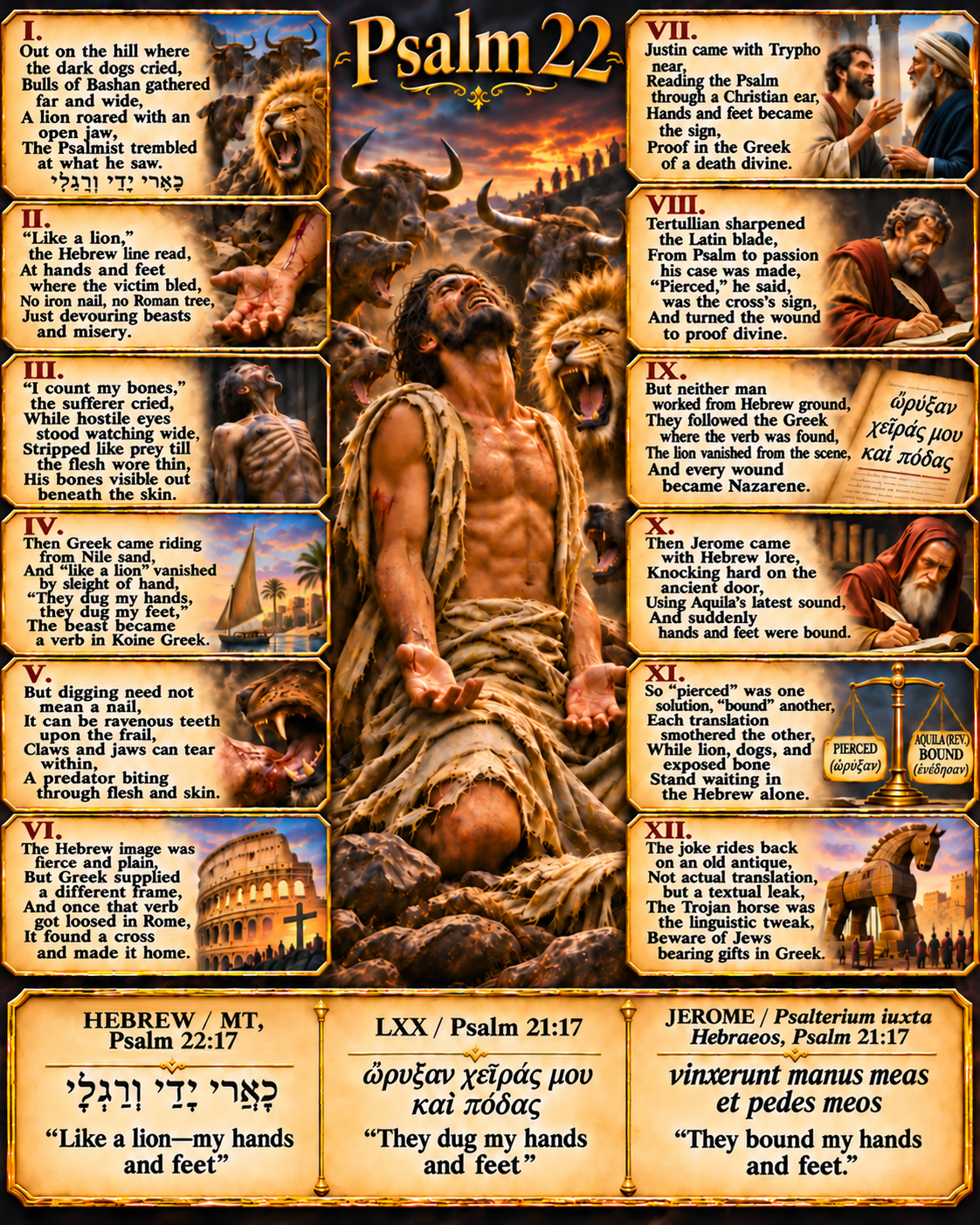
Out on the hill where the dark dogs cried,
Bulls of Bashan gathered far and wide,
A lion roared with an open jaw,
The Psalmist trembled at what he saw.
“Like a lion,” the Hebrew line read,
At hands and feet where the victim bled,
No iron nail, no Roman tree,
Just devouring beasts and misery.
“I count my bones,” the sufferer cried,
While hostile eyes stood watching wide,
Stripped like prey till the flesh wore thin,
His bones visible out beneath the skin.
Then Greek came riding from Nile sand,
And “like a lion” vanished by the sly of hand,
“They dug my hands, they dug my feet,”
The beast became a verb in Koine Greek.
But digging need not mean a nail,
It can be ravenous teeth upon the frail,
Claws and jaws can tear within,
A predator biting through flesh and skin.
The Hebrew image was fierce and plain,
But Greek supplied a different frame,
And once that verb got loosed in Rome,
It found a cross and made it home.
Justin came with Trypho near,
Reading the Psalm through a Christian ear,
Hands and feet became the sign,
Proof in the Greek of a death divine.
Tertullian sharpened the Latin blade,
From Psalm to passion his case was made,
“Pierced,” he said, was the cross’s sign,
And turned the wound to proof divine.
But neither man worked from Hebrew ground,
They followed the Greek where the verb was found,
The lion vanished from the scene,
And every wound became Nazarene.
Then Jerome came with Hebrew lore,
Knocking hard on the ancient door,
Using Aquila’s latest sound,
And suddenly hands and feet were bound.
So “pierced” was one solution, “bound” another,
Each translation smothered the other,
While lion, dogs, and exposed bone
Stand waiting in the Hebrew alone.
The joke rides back on an old antique,
Not actual translation, but a textual leak,
The Trojan horse was the linguistic tweak,
Beware of Jews bearing gifts in Greek.
References
| Historical figure | Approximate dates | Relevance |
|---|---|---|
| King David | c. 1040–970 BCE | Traditional author of Psalm 22; reigned c. 1010–970 BCE |
| Simon Magus | c. 30–60 CE (active) | Samaritan religious figure discussed by Justin |
| Justin Martyr | c. 100–165 CE | Christian apologist; First Apology, Dialogue with Trypho |
| Trypho | Mid-2nd century CE | Jewish interlocutor in Justin’s dialogue |
| Tertullian | c. 155–220 CE | Latin theologian; Against Marcion |
| Aquila of Sinope | c. 130–150 CE (active) | Greek translator of the Hebrew Bible |
| Symmachus | c. 170–200 CE (active) | Greek biblical translator |
| Jerome | c. 347–420 CE | Biblical scholar; Hebrew-based Psalter |